Drink Guides
Bottled Green Tea at the Konbini: Ranked, and Why It Just Got Pricier
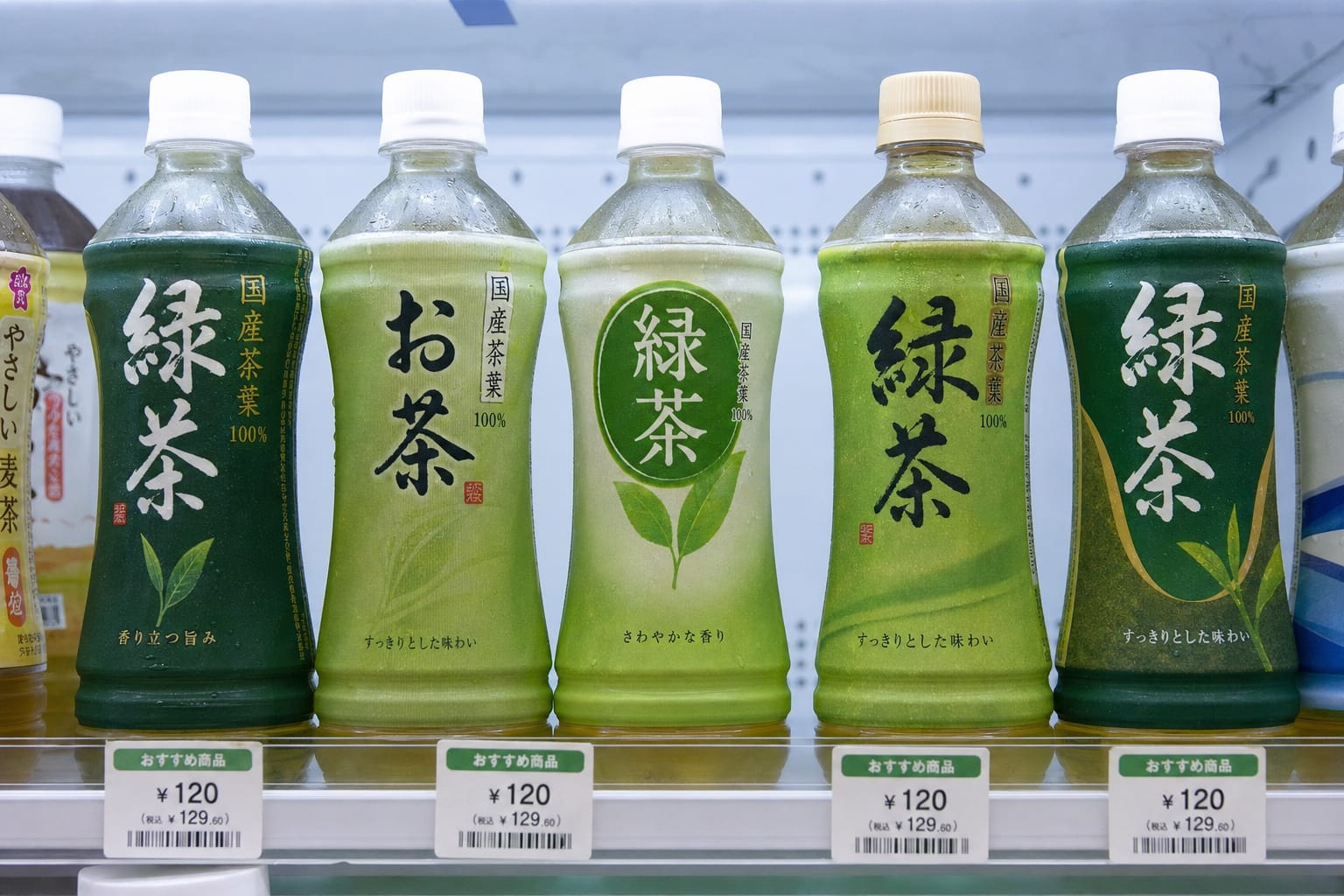
Here’s something that happened this year that most non-Japan tea drinkers never noticed: the price of every bottled green tea in the konbini fridge went up, and it wasn’t the usual inflation story. It’s the matcha boom’s fault. I’ll explain in a second, because it’s a genuinely good story.
The short answer: for an everyday bottle, grab Suntory Iyemon — it’s the one that actually sells the most inside convenience stores specifically, not just in general. Want something stronger and more bitter, closer to what you’d brew at home? Coca-Cola’s Ayataka, especially the “koi” (concentrated) version. Want the cheapest option that still tastes like real tea and not warm water? The store’s own private-label bottle, honestly, more often than not. Details on all four majors plus the PB question below.
Why your bottled tea got more expensive
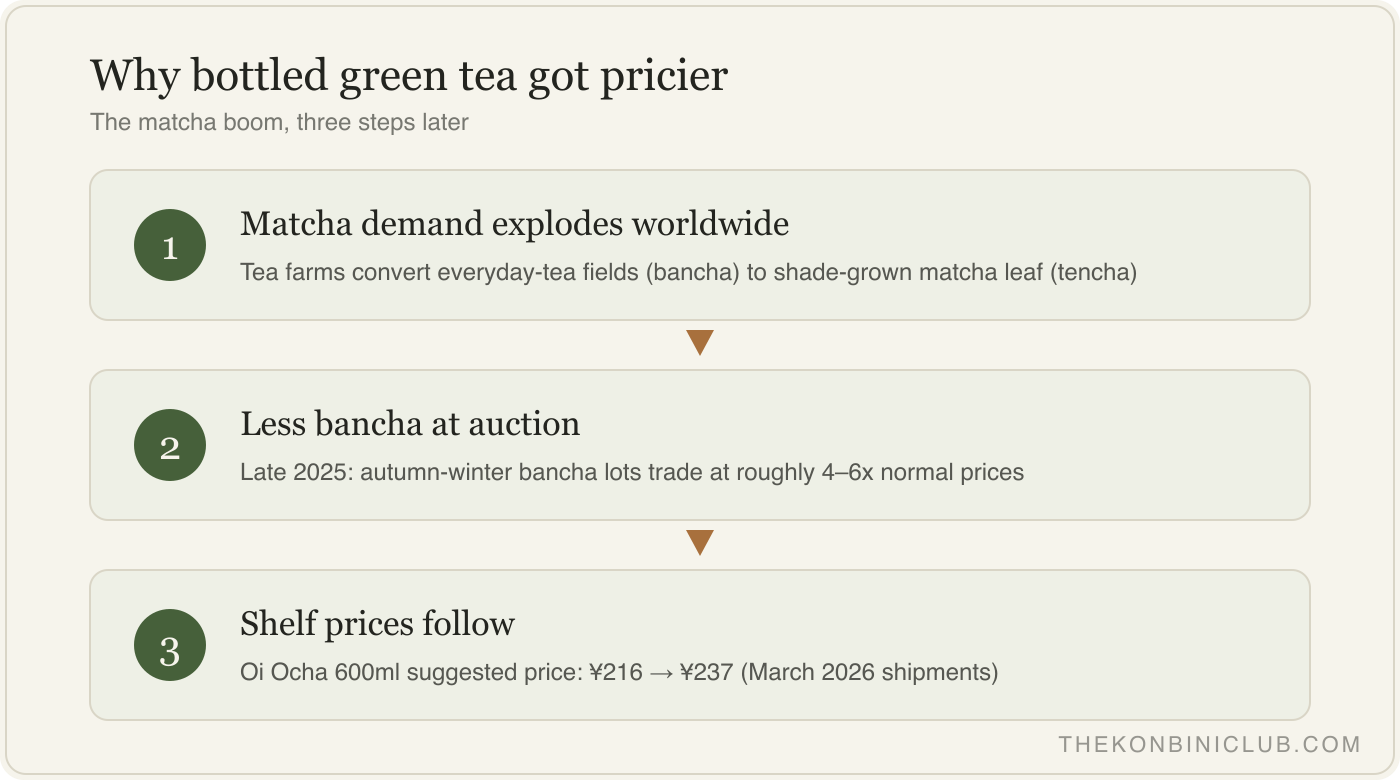
Quick detour, because it explains a lot about why konbini shelves look the way they do right now. Bottled green tea is made mostly from bancha — the coarser, cheaper autumn-and-winter leaves, a different harvest entirely from the delicate first-flush stuff that ends up as high-grade sencha. For decades bancha was the unglamorous byproduct nobody fought over.
Then matcha went global. Demand for tencha — the shade-grown leaf that becomes matcha powder — exploded, and Japanese tea farms started converting fields over to it, because matcha pays more per kilo. Less land planted for everyday leaf meant less bancha at auction, and in late 2025 the autumn-winter bancha lots at the Kagoshima and Shizuoka tea markets were trading at something like four to six times their normal price. Ito En and Coca-Cola both raised prices on Oi Ocha and Ayataka from March 1 shipments — Oi Ocha’s 600ml bottle went from a suggested ¥216 to ¥237. That’s a global TikTok trend reaching back into a Shizuoka tea auction and taxing your evening bottle. I did not expect to be explaining supply chains in a snack blog, and yet.
The four brands, honestly ranked
1. Suntory Iyemon — the office-fridge default
Co-developed with Fukujuen, a Kyoto tea house that’s been in business since 1790 (founded by a man literally named Fukui Iemon, hence the name). It leads the pack specifically inside convenience stores, even though it runs second overall in the wider retail market — konbini shoppers pick it disproportionately. The flavor is balanced rather than bold: aroma-forward, gentler on the tongue than Ayataka. The downside of that same balance is that it can taste a little thin if you’re used to something stronger — which is exactly what the next bottle fixes. It’s the bottle I default to when I’m not in the mood to think about tea, which — I’ll be honest — is most days.
2. Coca-Cola Ayataka — the one that tastes like a teahouse
Ayataka markets itself on being brewed the way a proper tea shop would — gently swirled rather than shaken, per the ad copy — and you can taste the difference: more astringency, a real shibumi to it, that dry, mouth-puckering edge good green tea is supposed to have on purpose. The “koi” (concentrated) line pushes this further. If Iyemon is the polite bottle, Ayataka is the one that argues with you a little. I like that. My wife, who grew up drinking proper brewed sencha in Kyoto, will only take Ayataka from this list.
3. Ito En Oi Ocha — the one that started it all
Oi Ocha was the original PET green tea, decades before this was a category, and the “koicha” (dark/strong) version is the most tannic bottle on a mainstream shelf — closer to gyokuro concentration than the others get. It’s also now the most expensive of the four after the March hike. Worth it if you actually want strong tea; a waste of ¥237 if you don’t notice the difference, which, fairly, some people don’t.
4. Kirin Namacha — the one with a size trick worth knowing
Namacha’s ordinary bottle is 525ml, same as everyone else. But there’s a separate 600ml Namacha bottle that Kirin sells only through convenience stores — it doesn’t exist in supermarkets at all. Same tea, more volume for the same shelf. It’s the one genuinely useful piece of insider trivia in this whole ranking: if you’re paying convenience-store prices anyway, at least grab the bigger bottle.
Two things nobody explains to you first
All four of these are unsweetened. That trips up a lot of visitors — “iced tea” abroad usually means sugar, and a first sip of straight Oi Ocha expecting sweetness is a small betrayal. Japanese bottled tea is built to taste like tea, full stop; if you want it sweet, that’s what the canned coffee and the milk tea aisle are for.
The other thing: in winter, the same bottles reappear with an orange cap — the hot-safe version, engineered to survive sitting in the konbini’s heated case (the hotto shelf, usually right by the register) without the plastic degrading. Grab a cold-cap bottle by mistake in January and try to warm it yourself, and the bottle will let you know it disagrees.
Should you just buy the store brand?
Here’s my one clearly biased opinion in this article: yes, more often than you’d think. 7-Eleven’s private-label green tea is a joint product with Coca-Cola under the “Hajime” (一) name, brewed with a sealed, non-agitated extraction method they’re genuinely proud of — it’s not a cut corner, it’s a different recipe aimed at the same result. Lawson and FamilyMart’s own-brand teas are co-developed with Ito En’s food-service arm, the same company behind Oi Ocha. These aren’t discount knockoffs; they’re the same manufacturers making a cheaper version on purpose.
I buy the store brand for the daily bottle and save the name brands for when I actually want to taste something. That’s not a compromise. It’s just accurate about how much attention I’m paying to a bottle of tea I’m drinking at my desk.
One honest caveat, since I’ve had it happen to me: a genuinely cheap tea — the true ¥100-ish bargain-bin kind, well below the usual PB price — brewed strong and drunk on an empty stomach can leave your stomach feeling off. That’s ordinary tannins doing what tannins do at high concentration, and it’s easily avoided by skipping a liter of astringent tea before breakfast. I’m not a doctor, so take that as kitchen wisdom, not medical advice.
What to actually buy
For a 500ml bottle at the register — somewhere around ¥200 these days across all four majors, give or take the size and the month — my order of preference is: Iyemon for daily drinking, Ayataka koi when I want something with backbone, the store brand when I’m being cheap and won’t notice the difference anyway, and Oi Ocha koicha on the rare day I want tea that tastes like it’s arguing back.
None of these ship well internationally — PET bottles and international shipping don’t mix, which is one of the few Japanese-snack categories our subscription box comparison can’t solve for you. If you’re building a care package instead, stick to what does travel — the shelf-stable rotation in our snack starter list covers that ground. And if the matcha boom driving up your tea prices has you curious about matcha itself rather than what’s in the bottle, the seasonal KitKat rotation is oddly one of the easiest ways to taste where all that tencha demand is actually going.
Next time you’re standing in front of a konbini fridge wall of a dozen near-identical green bottles: they’re not identical, the price went up for a real reason, and the ugly store-brand one is probably fine.
The Konbini Hit List (Free)
The 25 snacks Japanese people actually buy — printable, with what to order online when you can't fly to Tokyo.
Get the hit list →