Food Guides
Tamago Sando: The Konbini Egg Sandwich That Earned Its Hype
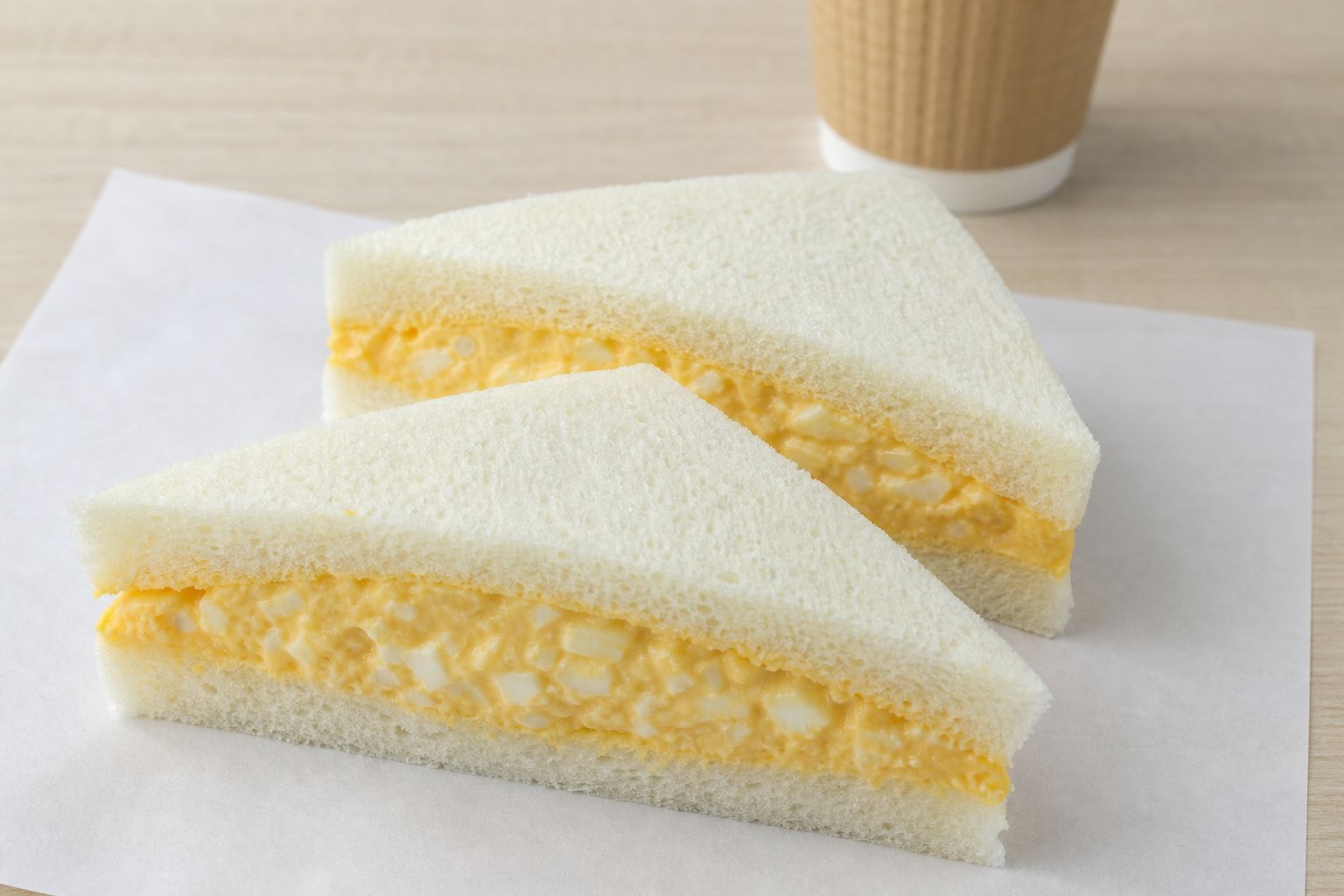
On December 3, 2025, 7-Eleven started selling a “Japanese-Style Egg Salad Sandwich” in stores across the United States, built to copy a sandwich that’s been sitting in Japanese refrigerated cases, mostly unchanged, since the 1970s. American food outlets covered it like a discovery. Over here, it’s just the sandwich by the register that nobody thinks twice about.
The short answer: the sandwich tastes different because of three unglamorous things — mayonnaise made only from egg yolks, bread with no crust and almost no chew, and a level of quality control most fast food can’t match. None of it is a secret. It’s also genuinely easy to copy at home, which is most of this article.
Why a plain egg sandwich became a small obsession
There’s no lettuce in a proper tamago sando. No mustard, no celery, no ham. It’s egg salad between two crustless slices of milk bread, cut into triangles, and that’s the entire recipe — which is exactly why it’s hard to fake with the wrong ingredients. There’s nothing else in the sandwich to hide behind.
I’ve written before that Lawson’s dessert case is the most slept-on shelf in any Japanese convenience store, and I stand by that. But if you ask me what impresses first-time visitors most, it isn’t dessert. It’s the egg sandwich two shelves down, and it usually takes one bite before someone asks what’s different about it.
Anthony Bourdain asked the same question on Parts Unknown more than once. Early on he called Lawson’s version “unnaturally fluffy, insanely delicious, incongruously addictive,” and later landed on the phrase that stuck: “pillows of love.” He was talking about Lawson specifically, not 7-Eleven — worth knowing, since the meme has since attached itself to whichever chain is nearest.
What’s actually in the pack
The mayonnaise is Kewpie, and Kewpie is not the same product as the mayo in a Western fridge. Toichiro Nakashima launched it in 1925 as an egg-yolk-only mayonnaise — no whites, unlike most Western brands — finished with rice vinegar and a hit of MSG for savoriness. The result is richer and tangier than Hellmann’s or Miracle Whip, and it’s the single biggest reason the filling tastes the way it does.
The bread is shokupan, Japan’s milk bread: soft, faintly sweet, almost cake-like, with the crusts cut away before the sandwich is ever assembled. Skip a real shokupan and use ordinary sandwich bread instead, and the whole thing turns dense and wrong in a way that’s hard to pin down until you’ve had the real version side by side.
7-Eleven, Lawson, and FamilyMart each keep a version in the chiller, and all three sell for under $2 — specifically ¥291 at 7-Eleven and ¥279 at Lawson right now. That price has held roughly steady for years, which is its own small miracle in a country where snack prices keep climbing (our bottled tea ranking covers why so many other konbini staples got more expensive this year).
There’s also a quieter reason the sandwich never tastes phoned in: konbini restock fresh food several times a day, and unsold sandwiches get pulled from the shelf well before the printed expiry, sometimes hours before. A chain that sells millions of these a week simply can’t afford an off batch sitting around all day. It’s a supply-chain outcome more than a culinary one, and it happens to produce a genuinely consistent sandwich as a side effect.
Once you’ve had the classic version, it’s worth knowing the variants exist. Some stores stock a ham-and-egg sandwich alongside it, and every so often a potato-salad hybrid shows up as a limited item. Start with the plain egg version first; it’s the one the whole reputation is built on, and everything else is a remix of it.
How to make one at home
This isn’t complicated, but the order of operations matters more than people expect.
- Hard-boil 4 eggs, then cool them completely — a warm egg salad turns watery.
- Separate the yolks from the whites. Mash the yolks smooth with about 3 tablespoons of Kewpie mayonnaise, a pinch of sugar, and a little salt and white pepper. Chop the whites coarsely and fold them in — don’t mash everything together into one paste, or you lose the texture that makes this good.
- Butter both slices of bread, edge to edge, with a thin layer of softened unsalted butter. This isn’t optional flavor — it’s a moisture barrier that keeps the bread from turning soggy before you eat it.
- Pile the filling thick. A proper tamago sando is filling-forward; if you can see more bread than egg salad through the side, you’ve under-filled it.
- Wrap it and chill for 15–20 minutes before cutting. This is the step people skip, and it’s the difference between a clean triangle and a sandwich that falls apart on the cutting board.
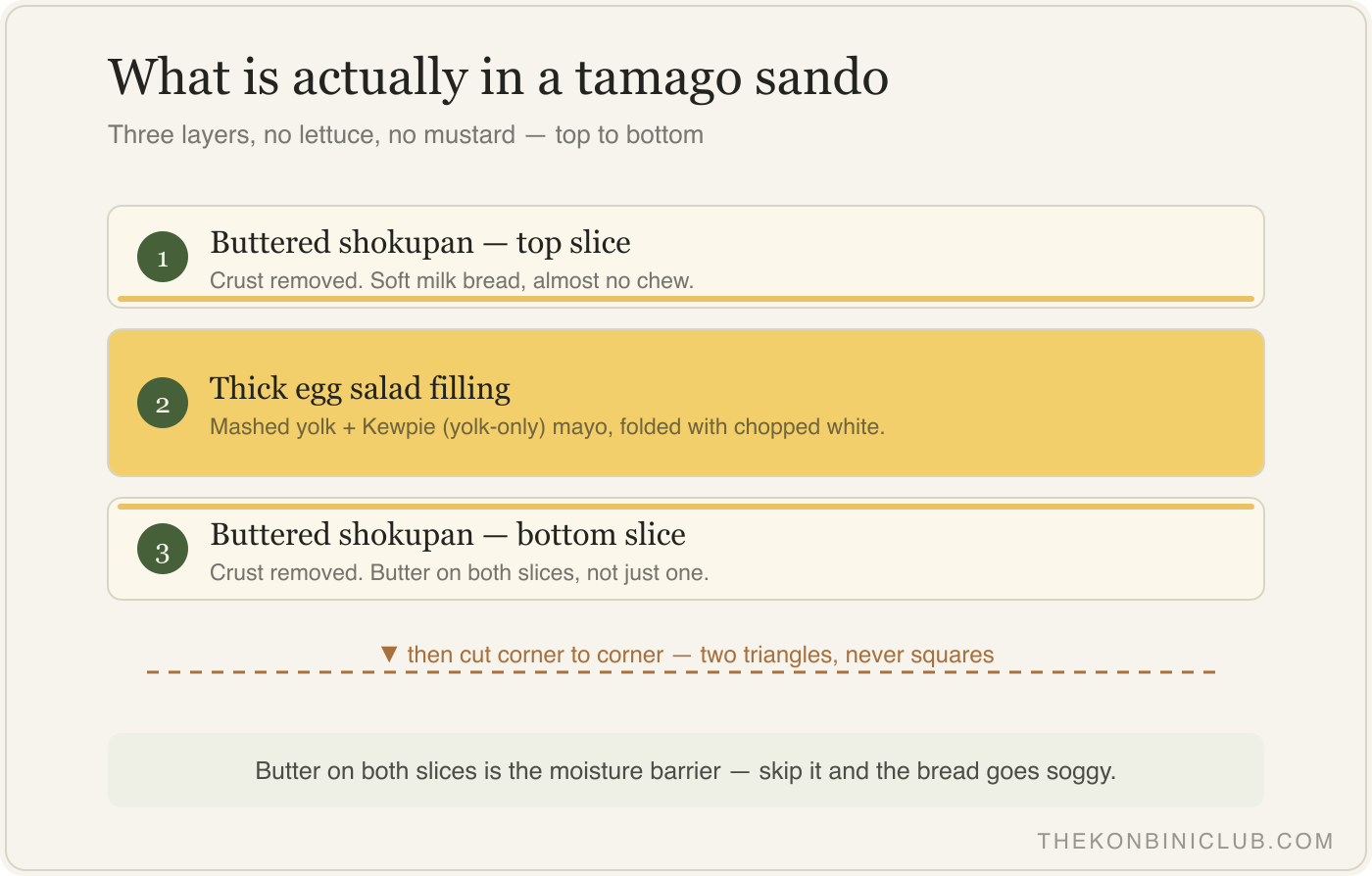
A few mistakes ruin this more often than people expect:
- Using pre-shredded or “shredded” egg salad texture from a food processor. It turns pasty. Mash by hand.
- Boiling the eggs too long. A grey ring around the yolk means overcooked; it won’t ruin the flavor, but it’s the difference between a filling that looks appetizing and one that looks like a school cafeteria.
- Cutting the sandwich cold, straight out of the fridge, with a dull knife. Let it sit five minutes at room temperature first, and use a sharp serrated blade in one clean stroke instead of sawing.
My one clearly biased opinion
Don’t bother making this with regular Western mayonnaise. It’s built from a different base — whole egg instead of yolk-only, distilled vinegar instead of rice vinegar, no MSG — and that difference shows up directly in the filling: flatter, and sour in the wrong direction. Kewpie isn’t sold in every supermarket outside Japan, so you may need to order it online or find it at an Asian grocery, but there’s no substitute worth using instead.
One honest downside, in fairness: Kewpie’s squeeze bottle uses MSG for umami, and if that’s something you specifically avoid, this isn’t the mayo for you — no workaround changes that.
Where this fits if you’re building a Japan trip or a snack order
A chilled sandwich obviously can’t be shipped in a snack box, which is the rare case our usual advice doesn’t cover — you either make it yourself or eat the real thing in Japan. If you are planning a trip, eat one of these in your first day rather than waiting; jet lag makes a ¥279 sandwich taste like room service.
If you’re building a care package instead, the shelf-stable classics in our snack starter list travel far better, and if the surprise factor matters more to you than control over exactly what shows up, our honest comparison of the big three snack boxes is the next thing to read.
It’s not a trick. It’s proportions, ingredient quality, and a company that decided a $2 sandwich still deserved to be made properly. Everything else — including an entire American launch sixty years after the fact — followed from that.
The Konbini Hit List (Free)
The 25 snacks Japanese people actually buy — printable, with what to order online when you can't fly to Tokyo.
Get the hit list →