Drink Guides
Konbini Coffee: The ¥140 Cup That Earned Tokyo's Trust
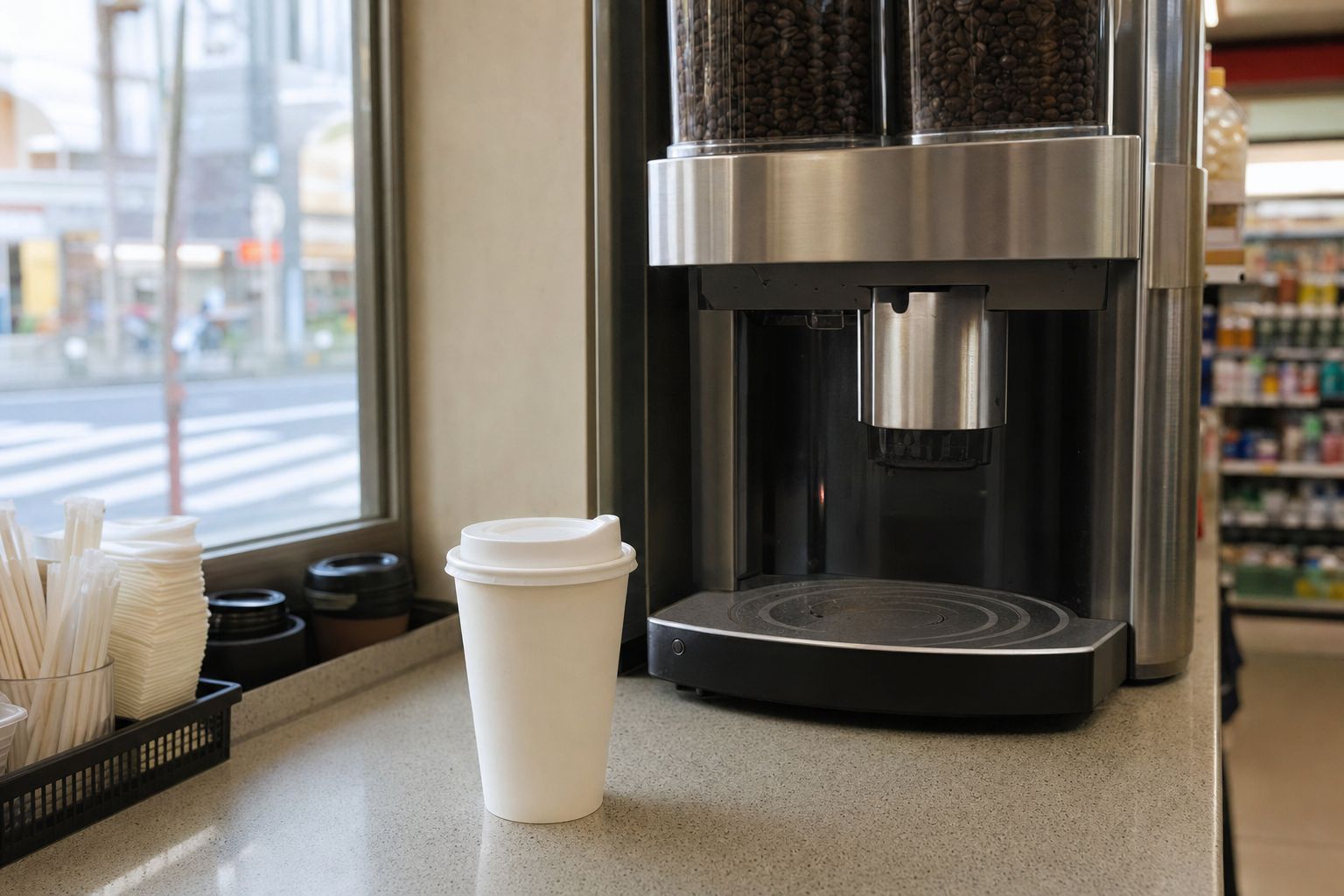
A cup of coffee that costs less than a bag of chips, made from beans ground at the moment you pay for it, sitting on the counter of a store that also sells rice balls and phone chargers. That’s the part visitors never expect: konbini coffee in Japan isn’t the sad, burnt stuff sitting in a glass pot at a gas station back home. It’s a category three national chains have spent over a decade fighting to win, and the coffee got better because none of them were willing to lose.
The short answer: it’s good because it’s brewed to order, one cup at a time, from a machine that grinds whole beans on the spot — not filtered from a pot that’s been sitting since 7 a.m. Here’s what that actually looks like at the three chains, what it costs right now, and where I’d actually spend my ¥160.
Why konbini coffee doesn’t taste like gas station coffee
The mechanism is almost embarrassingly simple. You pay at the register first, get a paper cup with a size sticker on the bottom, and place it under a machine that grinds beans and brews directly into your cup — no carafe, no reheating, no cup sitting under a heat lamp for three hours. Every cup is one serving, made in the twenty seconds it takes the machine to run.
7-Eleven’s Seven Café, FamilyMart’s Famima Café, and Lawson’s Machi Café all launched within about a year of each other back in 2013, and the timing wasn’t a coincidence — once 7-Eleven proved a good cup could sell for less than most people’s train fare, the other two had no choice but to match it or lose foot traffic. That competition never really stopped. FamilyMart pushed out its “most menu items ever” Famima Café relaunch this June, adding an LL size on top of the usual lineup, and I doubt that’s the last move any of the three makes this year.
What it actually costs in 2026 (and who’s cheapest)
Prices moved again this year, so here’s where things actually sit right now:
| Chain | Regular size | Price | Notes |
|---|---|---|---|
| 7-Eleven (Seven Café) | R | ¥140 for a regular | Same price hot or iced; the cheapest entry point of the three |
| FamilyMart (Famima Café) | Blend S | ¥158 | Raised from ¥150 in the July 2026 revision |
| Lawson (Machi Café) | S | ¥160 | Most expensive of the three, and the one with the strongest reputation for actual bean quality |
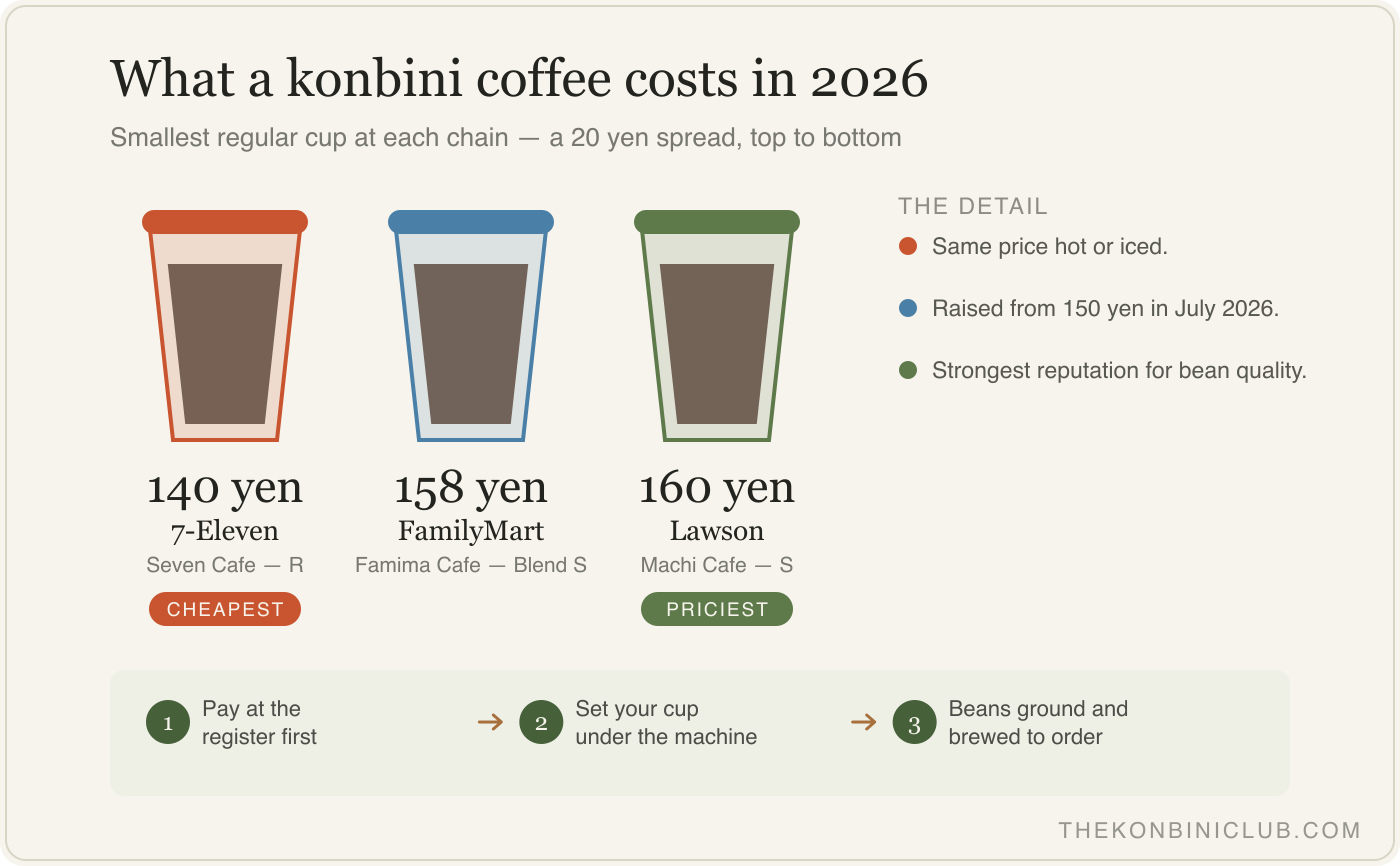
None of these are the ¥100 cup this category launched with — Lawson’s original pitch, over a decade ago, was a ¥100 S-size coffee, and that price hasn’t existed anywhere in the chain for years now. Coffee bean costs went up, and konbini coffee went up with them, same as everything else on these shelves (our bottled tea rankings cover the same pattern with green tea).
Which one I actually buy
Lawson, most days, and I’ll say the biased part plainly: I think it’s worth the extra twenty yen over 7-Eleven. The Machi Café blend tastes noticeably less thin to me, and among the people I know who actually pay attention to which chain they buy from, Lawson wins that argument more often than not. That’s not a universal opinion — plenty of people can’t taste the difference and would rather save the yen — but if you’re only trying one, start there.
The one I’d skip: FamilyMart’s oversized LL cup. It’s a lot of coffee for the price jump, and by the time you’re two-thirds through it, it’s gone lukewarm in a way the S size never has time to. Bigger isn’t better here; it’s just more coffee cooling down slower than you drink it.
My own order, most weekday mornings, runs both at once: a Lawson iced coffee and a bottle of unsweetened green tea from the fridge case, a habit I’ve kept since long before I started writing about this stuff. Coffee and green tea aren’t rivals in a Japanese household the way people abroad sometimes assume. My mornings run on both, and it’s ordinary here, not a quirk. Where I do draw a line is caffeine after dinner — hojicha or barley tea instead, both naturally low in it, since a cup of Machi Café blend at 9 p.m. means I’m awake at midnight staring at the ceiling. I’m not a doctor, and how caffeine affects sleep varies a lot person to person, but that one’s from paying attention to my own nights for a few years running.
There’s also an older layer to this that the fresh-brewed counters never fully replaced: canned and bottled coffee, the Boss and Georgia cans that have been sitting in konbini fridges since long before any machine ground a bean in front of you. It’s sweeter, weaker, and nobody pretends otherwise — but it’s also the coffee you grab when you’re already walking and don’t want to stand at a machine for twenty seconds. Both things exist in the same fridge case, for different moods, and neither one has managed to kill the other off in over a decade of trying.
How to actually order one
If you’ve never used the machine, it trips people up exactly once:
- Tell the register clerk your size and hot or iced (or scan it yourself at the self-checkout kiosk most stores have now). You pay before you pour.
- Take the cup with the sticker on the bottom to the machine near the register — don’t grab a random cup from the stack.
- Set the cup on the marked spot and press the button matching your size. The machine grinds and brews straight into the cup; don’t walk away mid-pour or you’ll come back to an overflow.
- Lid it yourself from the stack next to the machine. Nobody does this step for you.
It’s a small ritual, but it’s one every regular here does without thinking, the same unthinking way people reach for the tamago sando two shelves over.
One money-saving detail most visitors never find: FamilyMart sells coffee tickets through its FamiPay app in bundles where you pay for ten cups and get an eleventh free, which is the closest thing any of the three chains offer to a loyalty program. It only pays off if you’re already a regular at that specific chain, but for a daily habit, that’s a real discount on something you were buying anyway — call it Japan’s quietest form of kodawari, the particular, almost stubborn attention to detail that makes people rebuild a ¥100 machine coffee into a category worth defending.
Where this fits if you’re stocking up from abroad
You can’t order a fresh cup of Seven Café through the mail — that part of konbini culture only exists in Japan, which puts it in the same bucket as chilled sandwiches and soft-serve. What you can get shipped is the instant and drip-bag coffee Japanese brands sell for the exact mornings I just described, and if a curated box is more your speed than sourcing it yourself, our honest comparison of Sakuraco, TokyoTreat, and Bokksu is the place to start. For the wider rotation of what’s actually worth grabbing off these shelves, the snack starter list is the companion piece to this one.
None of the three chains make headline-grabbing coffee. What they make is a cup that’s consistently fine, brewed fresh in front of you, for less than the price of a magazine — and after thirteen years of three companies refusing to let each other win, “consistently fine” turned out to be a genuinely hard thing to build.
— Sen
The Konbini Hit List (Free)
The 25 snacks Japanese people actually buy — printable, with what to order online when you can't fly to Tokyo.
Get the hit list →